A home can look tidy at a glance and still need much more than a quick reset. That is usually where the confusion starts with deep cleaning vs standard cleaning. Both services improve how a space looks and feels, but they serve different purposes, and choosing the right one can save time, money, and frustration.
For many homeowners, renters, and property managers, the real question is not which option is better. It is which option matches the current condition of the space. A home that gets regular upkeep has different needs than a house after a move, a rental between guests, or an office that has gone too long without detailed attention.
What deep cleaning vs standard cleaning really means
Standard cleaning is routine maintenance. It focuses on the surfaces and tasks that keep a home or business consistently presentable, sanitary, and comfortable. Think of it as the cleaning that helps you stay on top of daily life.
Deep cleaning is more intensive. It goes beyond the obvious surfaces and targets buildup, overlooked areas, and detail work that does not always happen during regular visits. The goal is not just to make the space look clean, but to reset it to a much higher standard.
That difference matters because each service is designed for a different stage of care. Standard cleaning helps maintain cleanliness. Deep cleaning helps restore it.
What is included in a standard cleaning?
A standard cleaning usually covers the tasks most people notice first. Floors are vacuumed or mopped, counters are wiped down, bathrooms are cleaned, mirrors are polished, trash is removed, and kitchen surfaces are refreshed. In living areas and bedrooms, cleaners typically dust reachable surfaces, straighten the overall appearance, and remove everyday dirt.
This type of service works well for recurring schedules because it keeps buildup from getting out of hand. Weekly, biweekly, or monthly visits are often enough to maintain a home that is already in decent shape. For offices and rental properties, standard cleaning also helps preserve a professional, guest-ready appearance without requiring a full reset every time.
What standard cleaning usually does not include is the more detailed work behind appliances, inside neglected corners, on baseboards throughout the property, or in spots where grime has had time to settle in. Some companies may offer small add-ons, but the purpose of standard cleaning is maintenance, not restoration.
What is included in a deep cleaning?
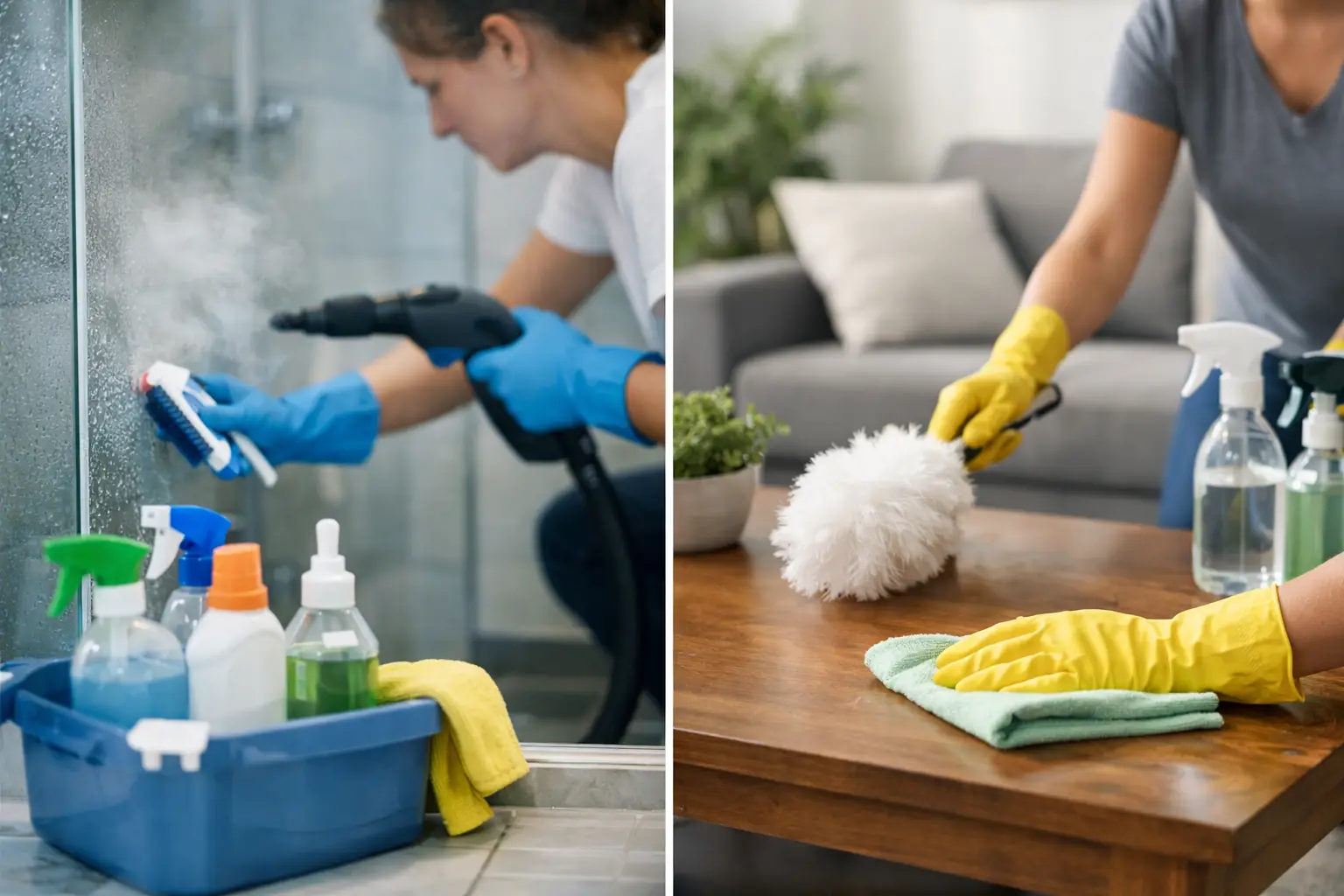
A deep cleaning typically includes most of the tasks in a standard cleaning, plus significantly more detail work. This is where cleaners spend extra time on buildup-prone surfaces and harder-to-reach areas. Baseboards, door frames, light switches, cabinet fronts, bathroom tile buildup, heavier dust, and more detailed kitchen and bathroom work often become part of the job.
In kitchens, deep cleaning may involve extra attention to grease, splash marks, and neglected surfaces around appliances. In bathrooms, it often means more focused scrubbing on soap scum, grout lines, fixtures, and other areas where residue collects over time. In bedrooms and common areas, dusting tends to be more thorough and corners, trim, and edges get more attention.
The exact scope varies by company, which is why clear service descriptions matter. A good cleaning provider will explain what is included, what may be considered an add-on, and whether the condition of the space requires extra time. That clarity helps avoid the common mismatch between customer expectations and the actual service booked.
When standard cleaning is the right choice
If your home or business is already being cleaned regularly, standard cleaning is often the right fit. It is practical for busy households, professionals with packed schedules, and office managers who need a dependable maintenance plan without overpaying for services they do not need every visit.
It also makes sense when the space is not especially dirty, just lived in. Maybe the bathrooms need refreshing, the floors need attention, and dust has started to collect. That is normal upkeep. In those cases, standard cleaning keeps the environment comfortable and prevents small messes from turning into larger ones.
For recurring clients, this is usually the most efficient approach. Once a property has been thoroughly reset, maintenance visits are often enough to preserve that clean, orderly feel.
When deep cleaning is worth it
Deep cleaning is usually the better choice when a space has not been professionally cleaned in a while, when buildup is visible, or when the property is going through a transition. Move-ins, move-outs, seasonal resets, post-construction cleanup, and first-time cleanings are common examples.
It is also a smart option before starting recurring service. If a cleaner is trying to maintain a home that already has layers of dust, soap residue, kitchen grease, or neglected corners, routine service may not deliver the results the client expects. Starting with a deep cleaning creates a clean baseline. After that, standard cleaning becomes much more effective.
For short-term rentals and homes preparing for guests, listings, or events, deep cleaning can also make a visible difference. People notice the details. Trim, fixtures, corners, and bathroom buildup affect how clean a space feels, even if the floors and counters look fine.
The cost difference and why it exists
One reason people compare deep cleaning vs standard cleaning is price. Deep cleaning almost always costs more, and there is a simple reason for that. It takes more labor, more time, and more detailed attention.
Standard cleaning follows a maintenance rhythm. Deep cleaning slows that rhythm down so cleaners can address areas that need scrubbing, hand-detailing, and closer inspection. If the home has not been professionally cleaned in months, the difference in time can be significant.
That does not mean deep cleaning should be booked every time. In fact, for many households and businesses, it would be unnecessary. The better value often comes from choosing deep cleaning when the property truly needs a reset, then switching to recurring standard cleaning to keep it in good shape.
Why the condition of the property matters more than the label
Two homes of the same size can need completely different levels of service. A small apartment with heavy buildup may require more effort than a larger home that has been maintained every two weeks. That is why square footage alone does not tell the whole story.
The same applies to commercial spaces. An office with low foot traffic may only need routine upkeep, while a break room, lobby, or restroom used by staff and visitors all day may need more frequent or more detailed attention.
This is where working with an experienced local company helps. A professional team can assess the condition of the space, explain what level of cleaning makes sense, and customize the plan instead of forcing every property into the same package.
How to decide which service to book
A simple way to decide is to ask whether your space needs maintenance or a reset. If it mostly looks clean and you just need help staying on top of everyday tasks, standard cleaning is likely enough. If you are noticing grime in corners, buildup in bathrooms, dust in neglected areas, or a general feeling that the property needs more than surface-level attention, deep cleaning is the better fit.
You should also consider timing. Before family visits, before listing a property, after renovations, at the start of a recurring plan, or after a busy season in your home or workplace, deep cleaning often pays off. During normal weeks when the goal is consistency, standard cleaning is the practical choice.
For families and businesses in Fredericksburg and surrounding communities, that decision often comes down to bandwidth as much as cleanliness. If your schedule is full, choosing the right service from the start prevents the cycle of catching up over and over again.
A better cleaning plan usually uses both
It is easy to frame deep cleaning and standard cleaning as an either-or choice, but many properties benefit from both at different times. A detailed initial cleaning followed by routine maintenance is often the most effective and cost-conscious plan.
That approach works especially well for homes with children, pets, high traffic, or limited time for upkeep. It also suits rental properties and offices where first impressions matter, but ongoing efficiency matters too. BrightHouse Cleaners often sees the best long-term results when a space is first brought up to a strong clean standard and then maintained consistently.
The right service should make your life easier, not leave you guessing what was included. When expectations are clear and the cleaning matches the real condition of the property, the results feel noticeably better. If you are unsure which option fits your space, start by being honest about its current condition. That answer usually points you in the right direction.