
A guest notices the bathroom mirror before they notice your welcome basket. They see the hair in the shower before they appreciate the throw pillows. That is why hosts keep asking the same practical question: how often should Airbnb be cleaned?
The short answer is after every guest, without exception. But for most hosts, that is only the baseline. A well-run short-term rental also needs scheduled deep cleaning, regular linen rotation, and a system for catching the small issues that build up between bookings. If you want better reviews, fewer complaints, and a property that holds up over time, cleaning has to be treated as part of operations, not a last-minute reset.
How often should Airbnb be cleaned between bookings?
An Airbnb should be fully cleaned after every checkout and before every new arrival. That includes bathrooms, kitchen surfaces, floors, trash removal, fresh linens, restocking essentials, and a quick inspection for damage or missing items.
For hosts, this is not just about appearance. It is about consistency. Guests expect hotel-level readiness, even in a private home or apartment. If one guest checks in and finds dust on baseboards or crumbs in the toaster, they may wonder what else was skipped. Cleanliness affects trust, and trust affects ratings.
The challenge is that not every turnover is equal. A one-night stay from a solo business traveler creates a different workload than a long weekend booking with kids. That is why smart hosts do not rely on a fixed checklist alone. They use a standard turnover clean every time, then adjust for the property condition, length of stay, and number of guests.
The cleaning schedule most Airbnb hosts actually need
Most short-term rentals need cleaning on three levels: turnover cleaning, periodic deep cleaning, and occasional refresh or maintenance cleaning.
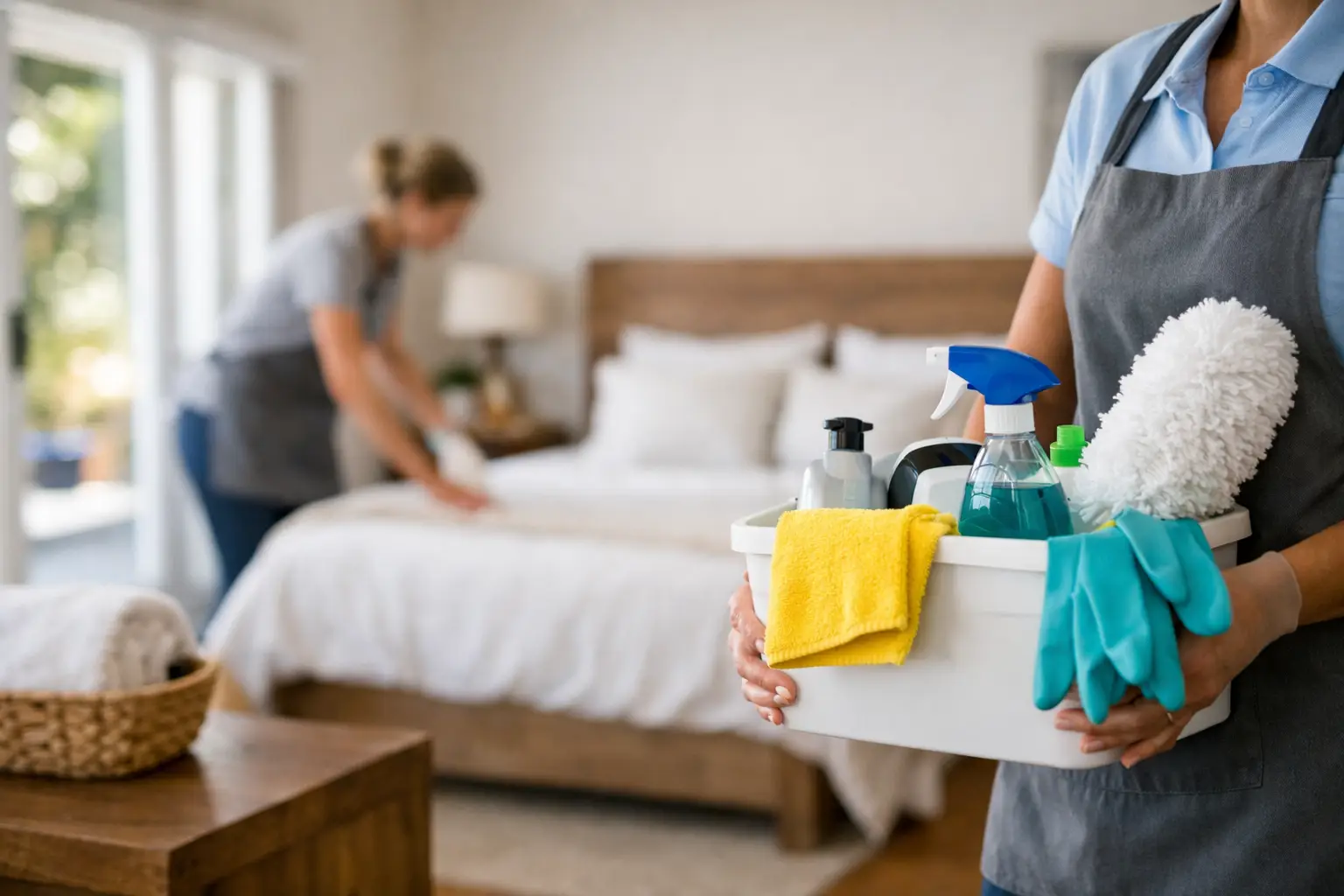
Turnover cleaning happens after every guest. This is your must-do service and the one most directly tied to guest satisfaction. It should leave the space fully reset and ready for same-day check-in if needed.
Deep cleaning should usually happen every 4 to 8 weeks, depending on occupancy. If your calendar stays full, monthly deep cleaning is often the safer choice. If bookings are lighter and guests are mostly short stays with low wear, every 6 to 8 weeks may be enough.
Then there is what many hosts overlook: refresh cleaning during longer bookings or high-traffic periods. If guests stay for a week or more, a mid-stay clean can help protect the property and improve the guest experience. This is especially useful for larger homes, family bookings, and rentals with multiple bathrooms.
When more frequent cleaning makes sense
Some Airbnbs need extra attention beyond standard turnovers. Properties with pets, outdoor spaces, hot tubs, fireplaces, or heavy kitchen use tend to get dirty faster. The same goes for rentals that host larger groups or back-to-back weekend stays.
Seasonality matters too. During peak travel periods, your home may not get much downtime. That can lead to faster buildup in overlooked areas like vents, under beds, behind furniture, and inside appliances. If your occupancy rate is high, cleaning frequency should rise with it.
A good rule is simple: the more wear your property gets, the less you should rely on surface cleaning alone.
What a proper Airbnb turnover clean should include
A turnover clean should do more than make the home look tidy. It should restore the space to a reliable standard every single time.
In the bathroom, that means sanitizing toilets, sinks, tubs, showers, mirrors, and fixtures. In the kitchen, it means wiping counters, checking the refrigerator, cleaning the microwave, and making sure dishes, coffee areas, and trash zones are fully reset. In bedrooms and living areas, linens should be changed, surfaces dusted, floors cleaned, and visible marks or fingerprints removed.
It should also include the details guests notice right away: neatly made beds, folded towels, stocked toilet paper, empty bins, fresh-smelling rooms, and an entryway that feels clean the moment they walk in.
For hosts managing multiple bookings, inspections matter as much as the cleaning itself. A good turnover catches burned-out bulbs, low supplies, minor damage, and anything left behind before the next guest finds it first.
How often should Airbnb be deep cleaned?
If turnover cleaning keeps the property guest-ready, deep cleaning keeps it from slowly slipping.
Most Airbnb properties should be deep cleaned every 4 to 8 weeks. For high-occupancy rentals, monthly deep cleaning is often the better standard. Deep cleaning focuses on buildup that regular turnovers may not fully address, such as grout, baseboards, blinds, ceiling fans, upholstery, mattress care, appliance interiors, and areas behind or under furniture.
This is one of the biggest trade-offs hosts face. If you only focus on fast turnovers, you may save time in the short term, but the property can start to feel tired even when it is technically clean. Guests may not always identify the exact problem, but they notice when a place feels less fresh than the photos suggest.
Deep cleaning also protects the life of the home. Soap scum, grease, dust, and hard water stains are easier to remove on a schedule than after months of buildup. Preventive cleaning is usually less disruptive and less expensive than catching up later.
Signs your Airbnb needs more than turnover cleaning
If reviews mention dust, odors, stained linens, sticky floors, or a place feeling worn, your cleaning schedule likely needs adjustment. The same is true if your team regularly feels rushed, supplies are running low, or you are spending extra time dealing with guest complaints.
Another sign is visual fatigue. Even without obvious dirt, a rental can start looking dull when windows, corners, grout lines, and soft surfaces are not refreshed regularly. Cleanliness is not only about sanitation. It also shapes the overall impression of care.
Long stays, same-day turns, and special cases
Not every booking fits the standard pattern. For stays longer than a week, many hosts benefit from offering or requiring a mid-stay cleaning. This helps with bathrooms, kitchens, linens, and general upkeep, especially in homes occupied by families or groups.
Same-day turns are another category where systems matter. If one guest checks out in the morning and the next arrives that afternoon, there is very little room for delays or missed details. In that situation, a trained turnover team is often more dependable than trying to handle the clean yourself between other responsibilities.
Then there are occasional resets that go beyond routine service. After a guest who smoked indoors, hosted an unauthorized gathering, or left the property unusually dirty, a standard turnover may not be enough. Extra cleaning time should be built into your operations, even if those cases are rare.
A realistic cleaning plan for hosts
The best cleaning schedule is the one you can maintain consistently. For most Airbnb hosts, that means a full turnover after every checkout, a deep clean every 4 to 8 weeks, and added service during long stays or high-traffic seasons.
If you manage a smaller property with moderate bookings, you may be fine with deep cleaning every other month. If you run a busy rental with frequent guests, pets, or large groups, monthly deep cleaning is usually worth it. What matters most is not choosing the cheapest or fastest option. It is choosing a level of care that matches your booking volume and guest expectations.
For local hosts in the Fredericksburg area, working with a dependable cleaning company can make that schedule easier to keep. BrightHouse Cleaners, for example, supports Airbnb turnover cleaning with the kind of consistency that helps hosts stay guest-ready without scrambling between checkouts and check-ins.
Cleaning should not be the part of hosting that keeps you up at night. When your schedule is clear and your standards are consistent, your property feels better, your guests notice, and your reviews tend to reflect it. A clean Airbnb is not just ready for the next arrival. It is ready to protect the reputation you are building with every stay.